Livna
A purpose-built system that runs a stable-building workshop end to end: stock, parametric products, quotes, scheduling, delivery and profitability.
 Finalist · Digital Transformation Award · Australian Manufacturing Awards 2026
“We developed and implemented LIVNA (Anvil spelt backwards), a customised business management platform specifically designed around our manufacturing processes — the system has significantly improved quoting speed, production planning, workflow management and operational efficiency.” — Anvil Enterprises, award submission
Finalist · Digital Transformation Award · Australian Manufacturing Awards 2026
“We developed and implemented LIVNA (Anvil spelt backwards), a customised business management platform specifically designed around our manufacturing processes — the system has significantly improved quoting speed, production planning, workflow management and operational efficiency.” — Anvil Enterprises, award submission
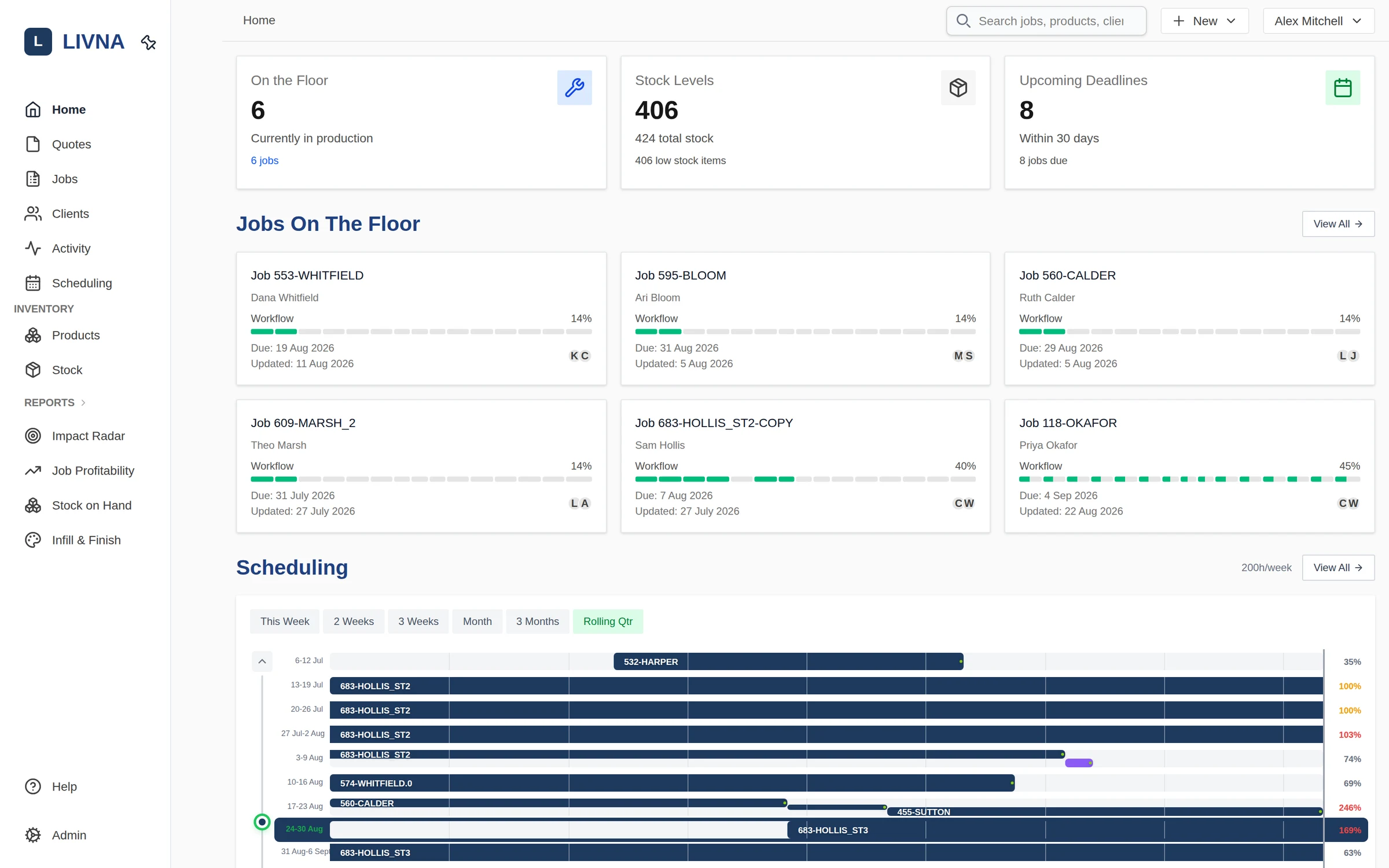
Dashboard: the floor, stock alerts, deadlines, schedule
Overview
Livna replaced the spreadsheets and whiteboards behind a horse-stable construction business. Parts, products and quotes live in one system, so when a client asks for a stable front 400 mm wider, the price, weight, bill of materials and workshop hours all update from one source of truth.
From stock rate to quoted price
Stock rates, product dimensions and workshop hours flow into the bill of materials and quoted price.
Stock rates, quantities, workshop hours and markup.
Stock
rates & measurementEach line is priced per metre or per unit by its measurement type.
Product: Stable Front, swing door
parametric assemblyRails track product_length, uprights product_height,
infill a formula of both.
Quote
modifiers → markup → GSTOrder is fixed: products → modifiers → markup → GST. Modifiers never see the marked-up total.
Product quantities and pricing
Product dimensions determine material quantities, weight and workshop hours. Modifiers, markup and GST complete the quote; freight stays outside the markup.
Product builder: parametric bills of materials
Products follow the frames used in the workshop. Stock, dimensions, material quantities, weight and labour hours stay with each part.
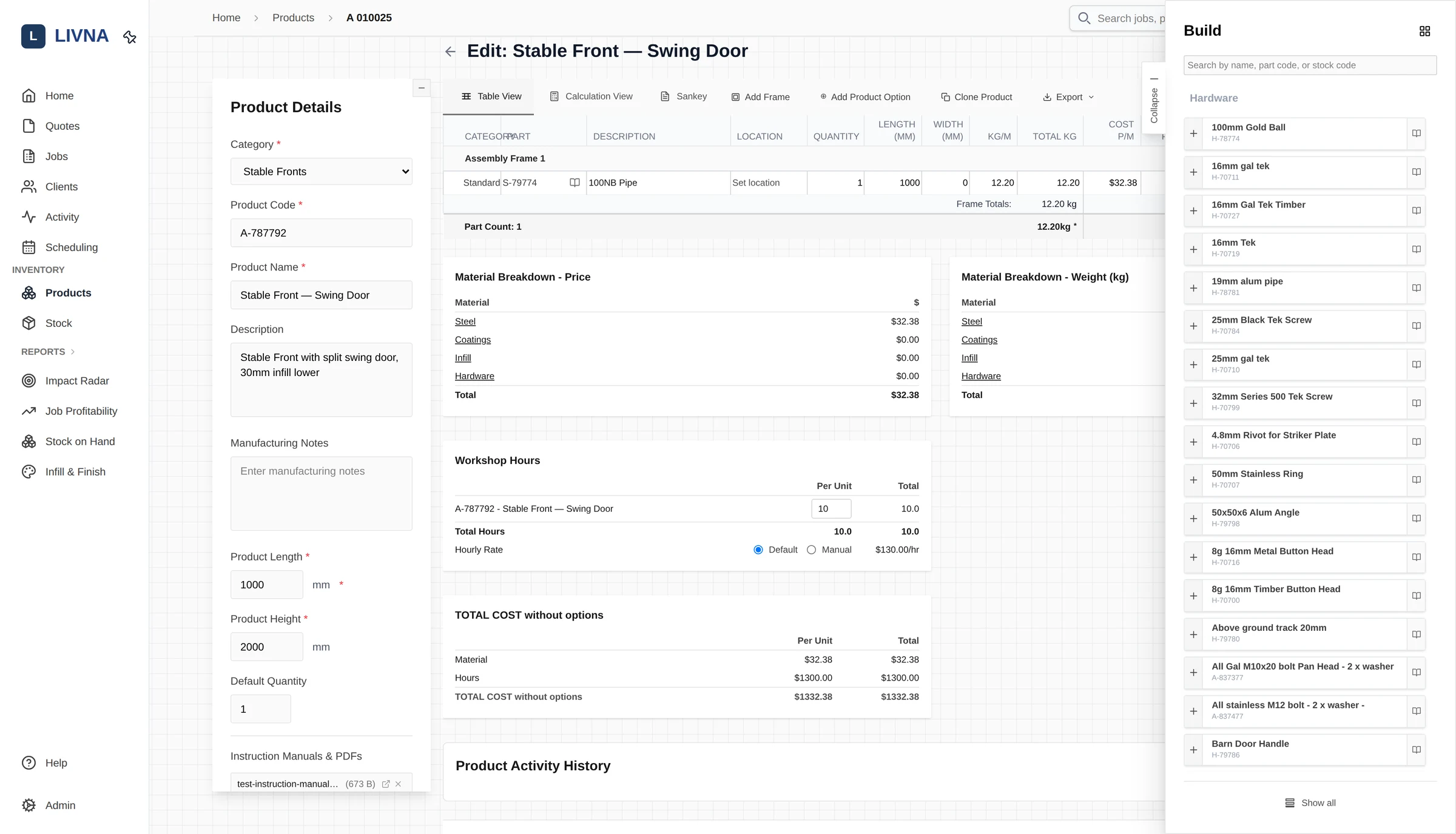
Editing a stable front
Quoting: dimensions on the quote itself
Length and height are editable on each quote line; the engine re-prices, re-weighs and updates modifiers in place. A live stock check flags shortfalls, and accepted quotes convert to jobs with every line carried across.
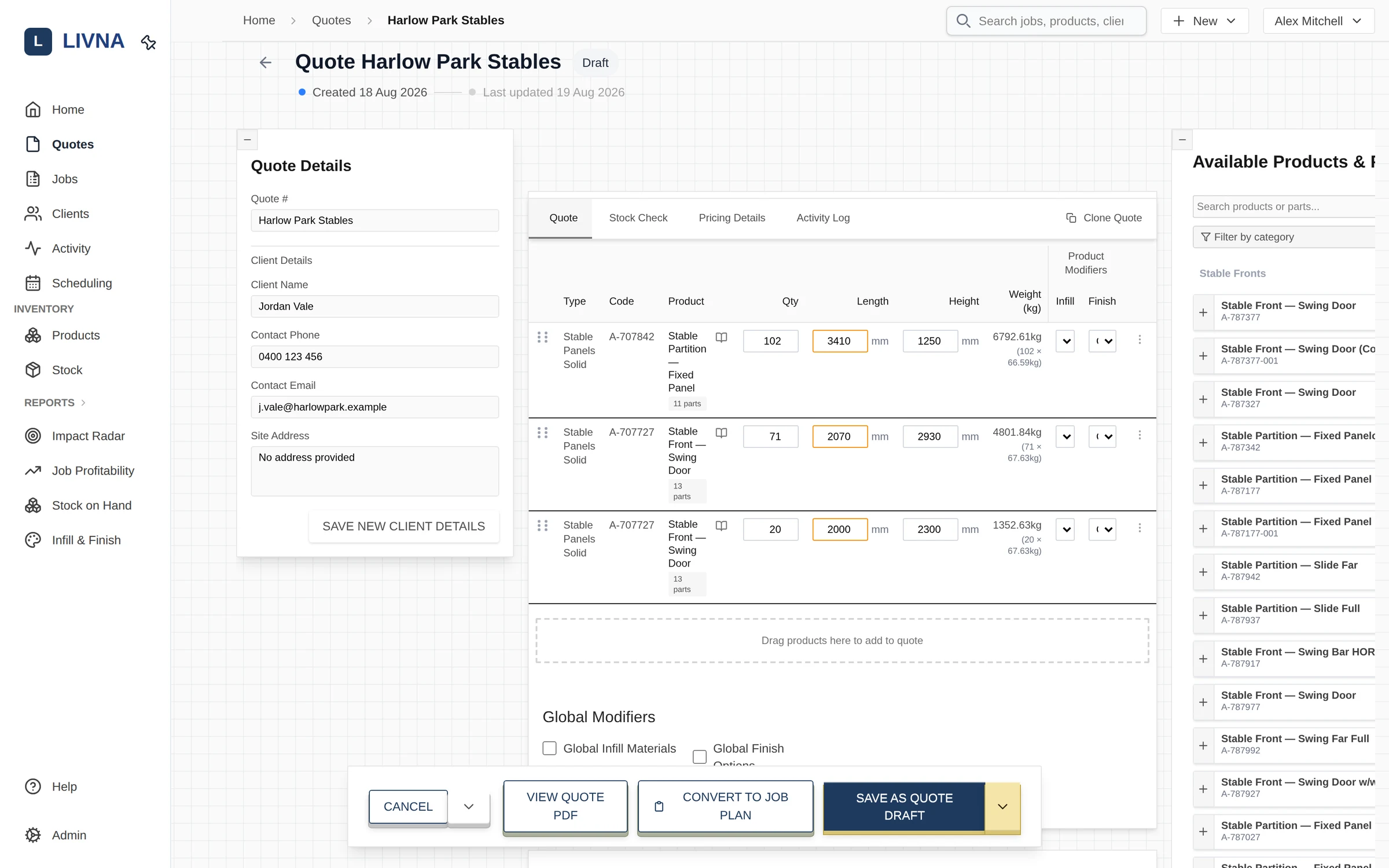
Quote editor: per-line dimensions, convert-to-job
Stock: one ledger for the whole floor
Each stock line carries its measurement type, dimensions, weight and cost channels — the inputs the pipeline stands on. Low-stock thresholds split quantity from length shortages, and stock takes run on an auditable schedule.
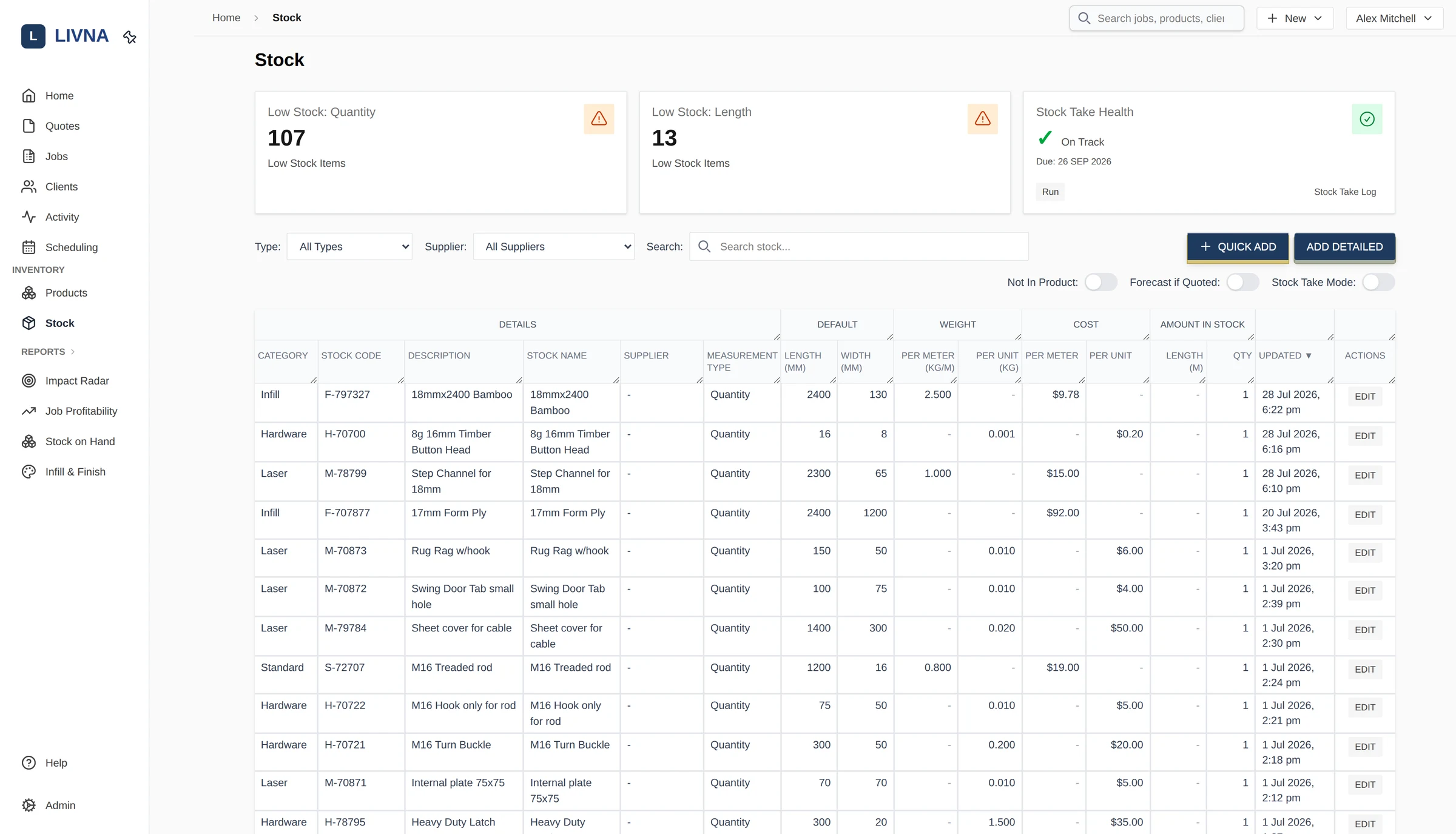
Stock ledger: cost channels and low-stock health
Scheduling: hours against capacity
Job hours sit against weekly workshop capacity. Overloaded weeks are flagged, with confirmed work and planning jobs carried into the forward schedule.
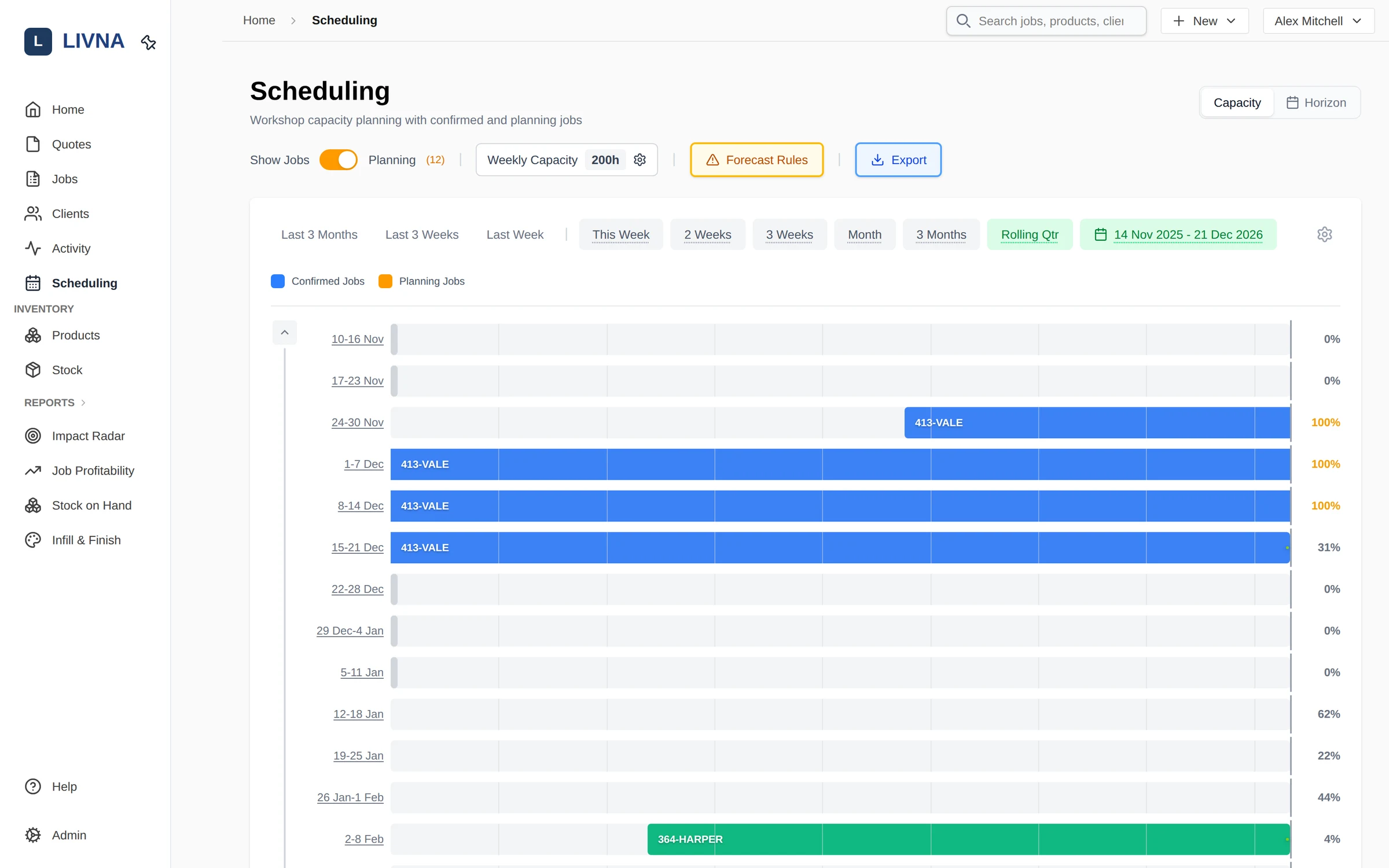
Confirmed vs planning jobs against weekly capacity
Jobs: from accepted quote to the floor
Accepting a quote creates the job: products, dimensions and pricing snapshots transfer automatically, so the floor builds exactly what was sold. A weighted workflow gives the dashboard an honest percent-complete.
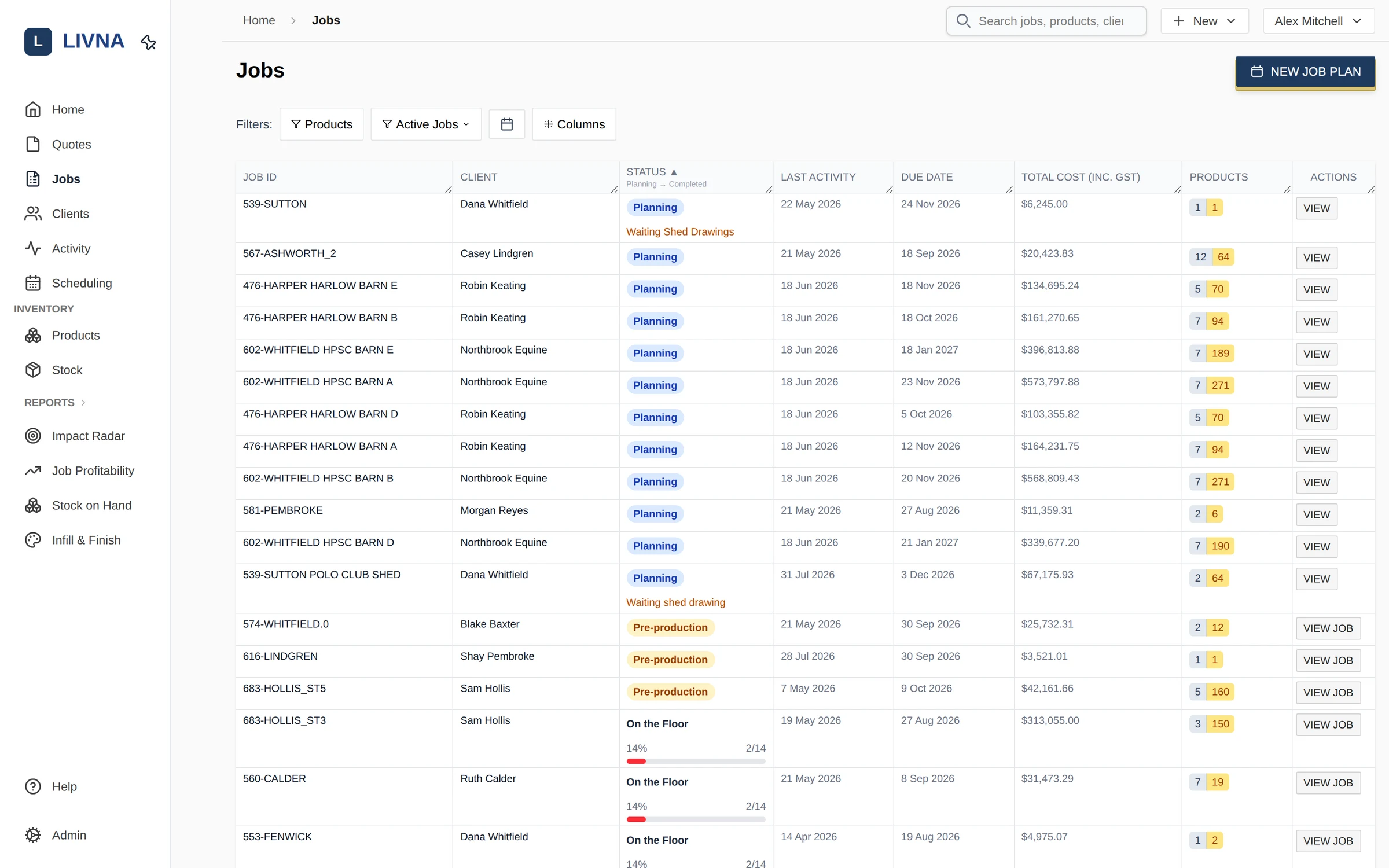
Jobs: workflow progress and due dates
Reporting: the feedback loop
The Impact Radar shows which stock the business depends on, what is ageing, and where vendor exposure concentrates. Job profitability compares quoted against actual, so the next quote's margins are set with evidence.
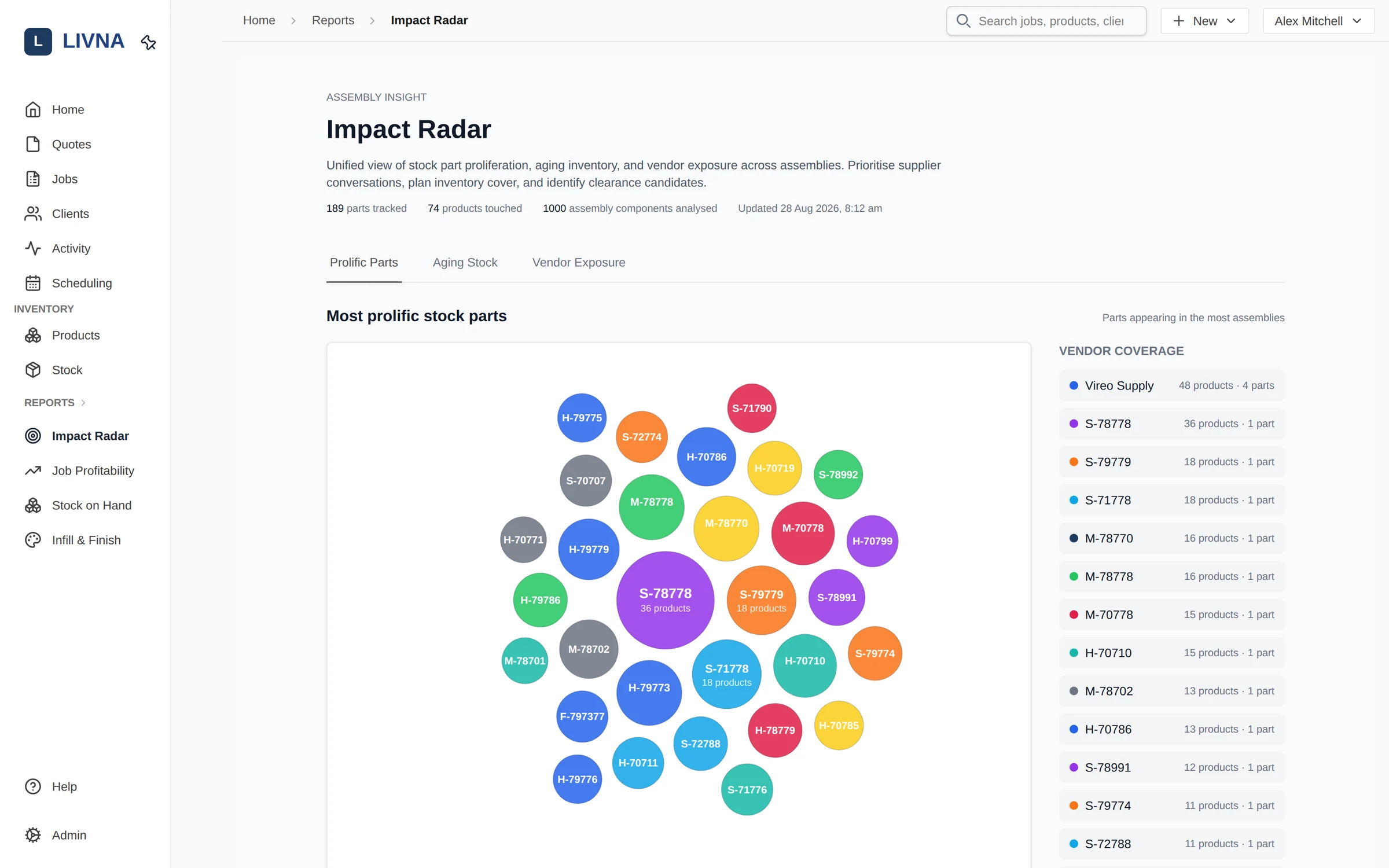
Impact Radar
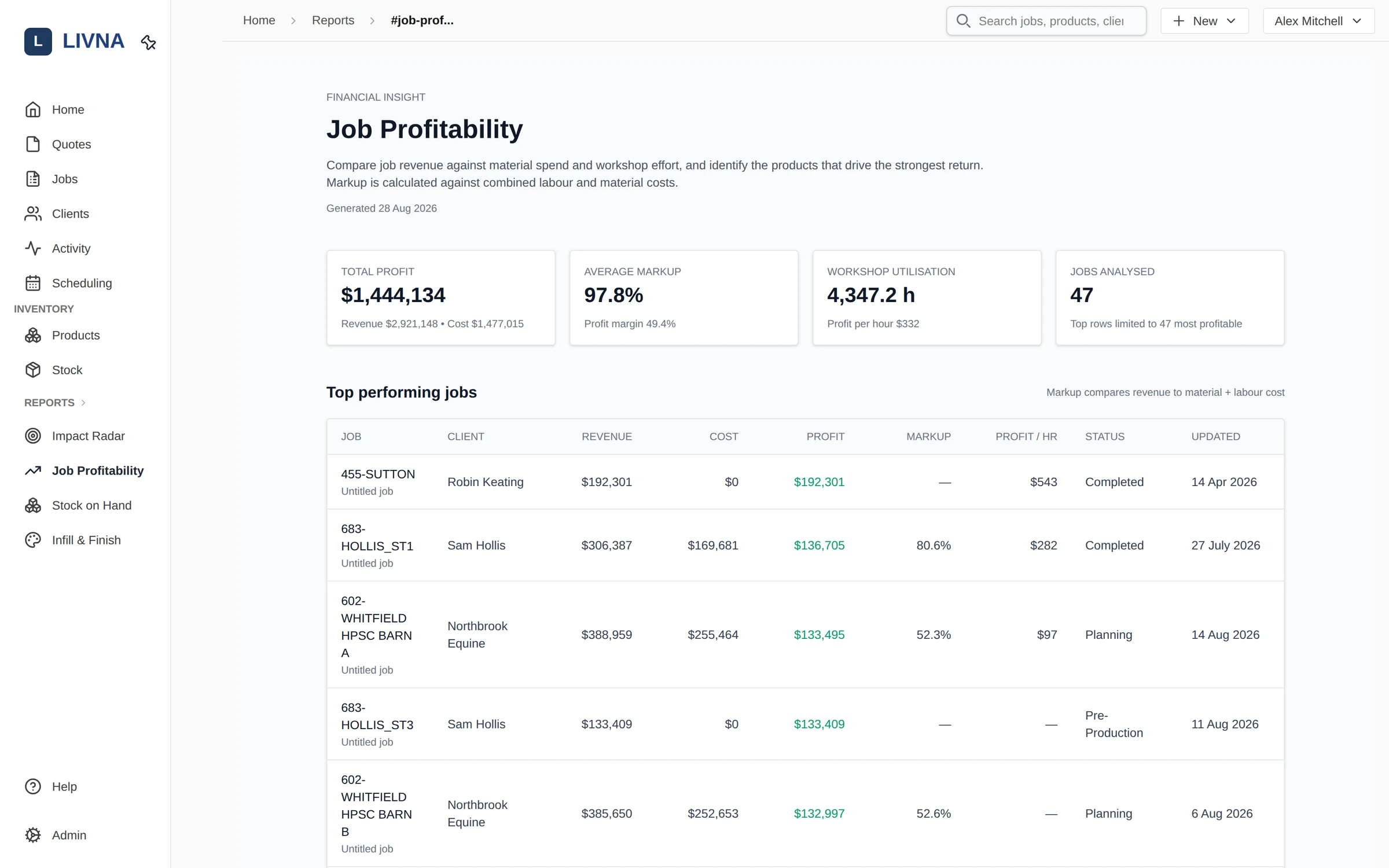
Quoted vs actual margin
Delivery
Powder coating, assembly checks, delivery and installation stay together on the job checklist.
From stock to job in half a minute
The whole pipeline, walked through in the app: stock is added, a 38-part product is built from it, the quote's markup is dialled to 90%, and the job lands in planning.
More like this
Still running a workshop on spreadsheets?
I want to work on something together.